CNN: Rod Kight Discusses Hemp on CNN's "This Morning Weekend"

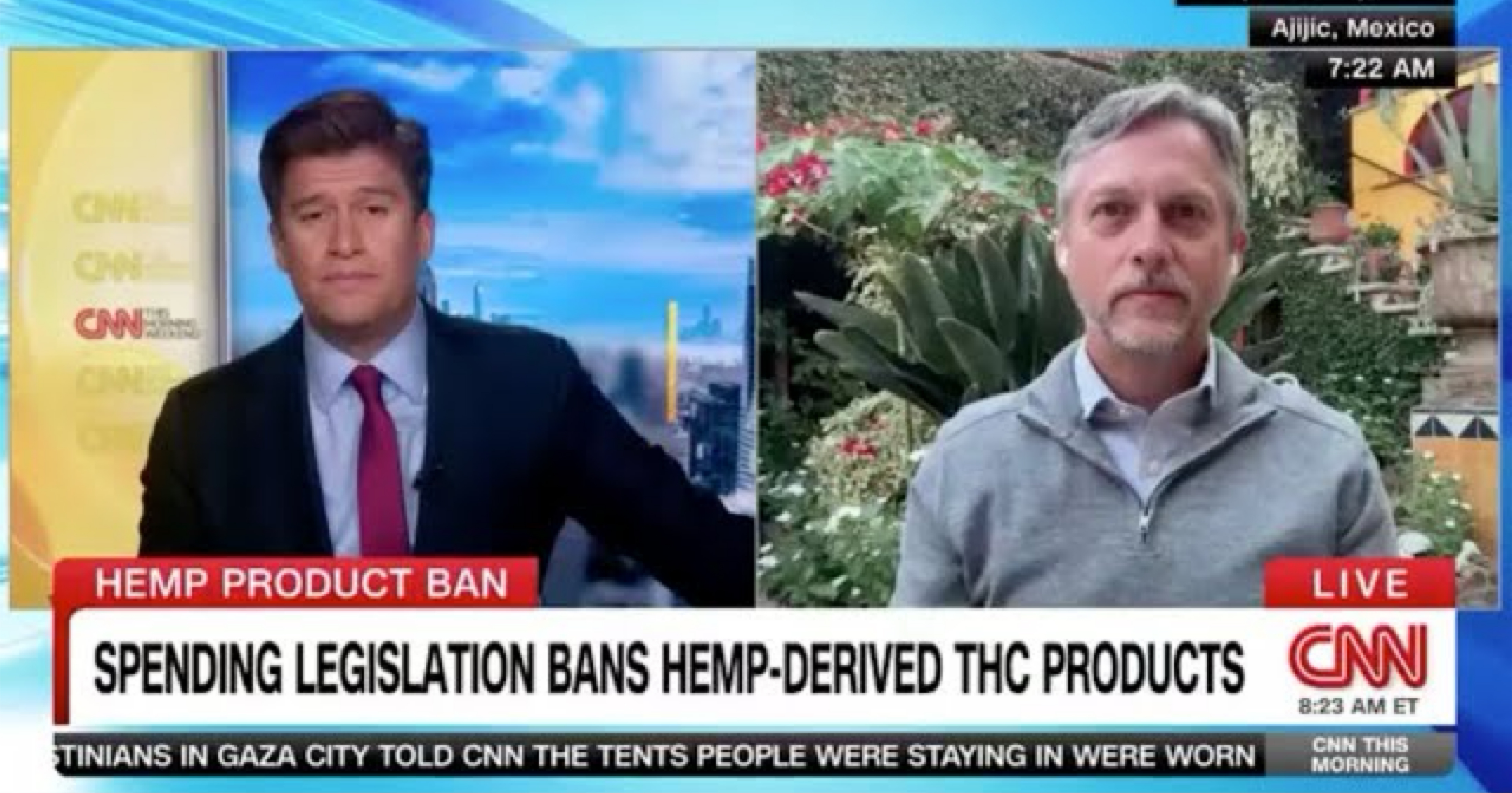
Rod Kight, a nationally recognized cannabis and hemp attorney, recently joined CNN’s This Morning Weekend to discuss the growing federal debate surrounding hemp regulation in the United States. Speaking with journalist Danny Freeman, Kight explained how the legal structure created by the 2018 Farm Bill led to today’s booming hemp industry and why some lawmakers are now pushing to change it.
The discussion highlights the increasing attention hemp products are receiving at the national level as policymakers consider potential restrictions on cannabinoids that have become widely available in states across the country.
The Legal Foundation of the Hemp Industry
Kight explained that the current hemp market exists because of the way the 2018 Farm Bill defined hemp under federal law. The legislation legalized hemp nationwide as long as it contains no more than 0.3 percent Delta 9 THC by dry weight.
By focusing specifically on Delta 9 THC rather than the broader chemical profile of the cannabis plant, the law created a legal framework that allowed many other cannabinoids to enter the market. This interpretation has opened the door for products such as Delta 8, Delta 9 edibles, and THCa flower, which are now sold widely across the country.
According to Kight, the industry did not create a loophole. Instead, businesses simply built products within the boundaries Congress established.
Why Lawmakers Are Reconsidering Hemp Policy
During the interview, Freeman raised concerns that some lawmakers in Washington have about the rapid growth of hemp derived cannabinoid products. Critics argue that the Farm Bill unintentionally allowed intoxicating products to reach consumers outside of the traditional state regulated cannabis systems.
Kight responded by explaining that the industry has been operating within the law as it currently exists. If lawmakers want to change the rules, Congress would need to revise the language of the Farm Bill or pass new legislation that more clearly defines which cannabinoids are permitted.
The debate now centers on whether federal policy should tighten hemp definitions or introduce new regulatory standards.
The Economic Impact of Hemp Legalization
One of the key points Kight emphasized during the interview was the economic impact the hemp industry has already created. Since hemp became federally legal in 2018, thousands of businesses have formed around cultivation, manufacturing, retail, and distribution.
Farmers, processors, and retailers across the United States rely on hemp derived products as a major source of income. Kight noted that any sudden regulatory shift could create serious disruption for small businesses that built their operations around current federal law.
For many entrepreneurs, hemp has become one of the few legal entry points into the broader cannabis market.
Hemp and Marijuana Remain Separate Under Federal Law
Another important topic in the conversation was the continued legal divide between hemp and marijuana. Although both come from the cannabis plant, federal law treats them very differently.
Hemp is federally legal as long as it stays under the 0.3 percent Delta 9 THC threshold established by the Farm Bill. Marijuana, however, remains classified as a Schedule I substance under the Controlled Substances Act.
This distinction has created unusual market conditions in states where recreational cannabis remains illegal but hemp products are still widely available.
What This Means for States Like North Carolina
For states like North Carolina, hemp derived products have created a rapidly growing market that exists alongside ongoing legalization debates. Consumers are able to purchase hemp derived cannabinoids even though traditional cannabis remains prohibited at the state level.
Kight pointed out that this legal structure is the result of federal policy rather than state level legalization. As Congress reviews hemp regulations in upcoming legislative sessions, the future of these products could change depending on how lawmakers choose to update the law.
The Future of Hemp Regulation
As the interview concluded, Kight emphasized that policymakers should approach the issue carefully. The hemp industry has grown quickly, but it has done so under the rules established by federal law.
If Congress decides to revise hemp policy, the challenge will be balancing consumer safety, clear regulations, and the protection of legitimate businesses that have followed the law since hemp was legalized.
With lawmakers actively debating changes to the Farm Bill and broader cannabis policy, the outcome of these discussions will likely shape the hemp industry for years to come.
Latest Policy Articles


Our Newsletter
Keep yourself informed with the most recent news and exclusive content.